Category: technical
-
Japanese words for how to look at wood fired pots
HI-IRO – colour changes in clay, mainly reds/browns from oxidation of iron
FUKIDASHI – feldspar/quatrz glassy white bobbles on the clay surface
ISHIHAZE – stone inclusions in the clay that erupt through the surface
HITTSUKI – a mark where two pots have attached together
SHIZENYU – fly ash and silica glaze
NUKE/BOTAMOCHI – bare clay where a pot has shadowed the flame
HI OMOTE/HI URA – did/didn’t face flame or recieve ash
HIDASUKI – red streaks in clay from reacting with straw
GOMA – yellow speckled clay like sesame seeds (goma), natural glaze
BIIDORO YU – green glass glaze (from VIDRO meaning glass in Portuguese)
KOGE – carbonated ash and cool marks
FURIMONO – kiln debri fallen and fused to the piece
-
cobalt free blue
Mixed with an alkaline potassium-base glaze, rutile and copper carbonate combine to make a beautiful turquoise blue in cone 6 oxidation.
I like the central colour the most, which is a 50/50 ratio of copper carbonate to rutile. I dipped the terracotta body in a Maiolica glaze for a brighter body response:
Maiolica glaze recipe:
Quartz, 6
Borax Frit, 62
Hyplas ball clay, 9
China clay, 9
Whiting, 3
Nepheline Synite, 5
Zircon, 11
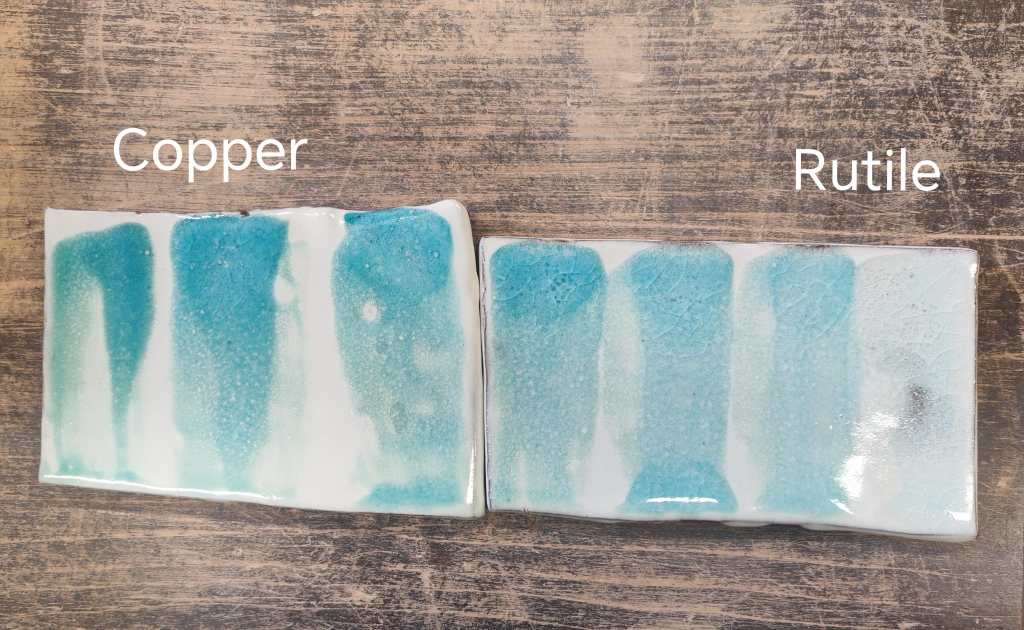
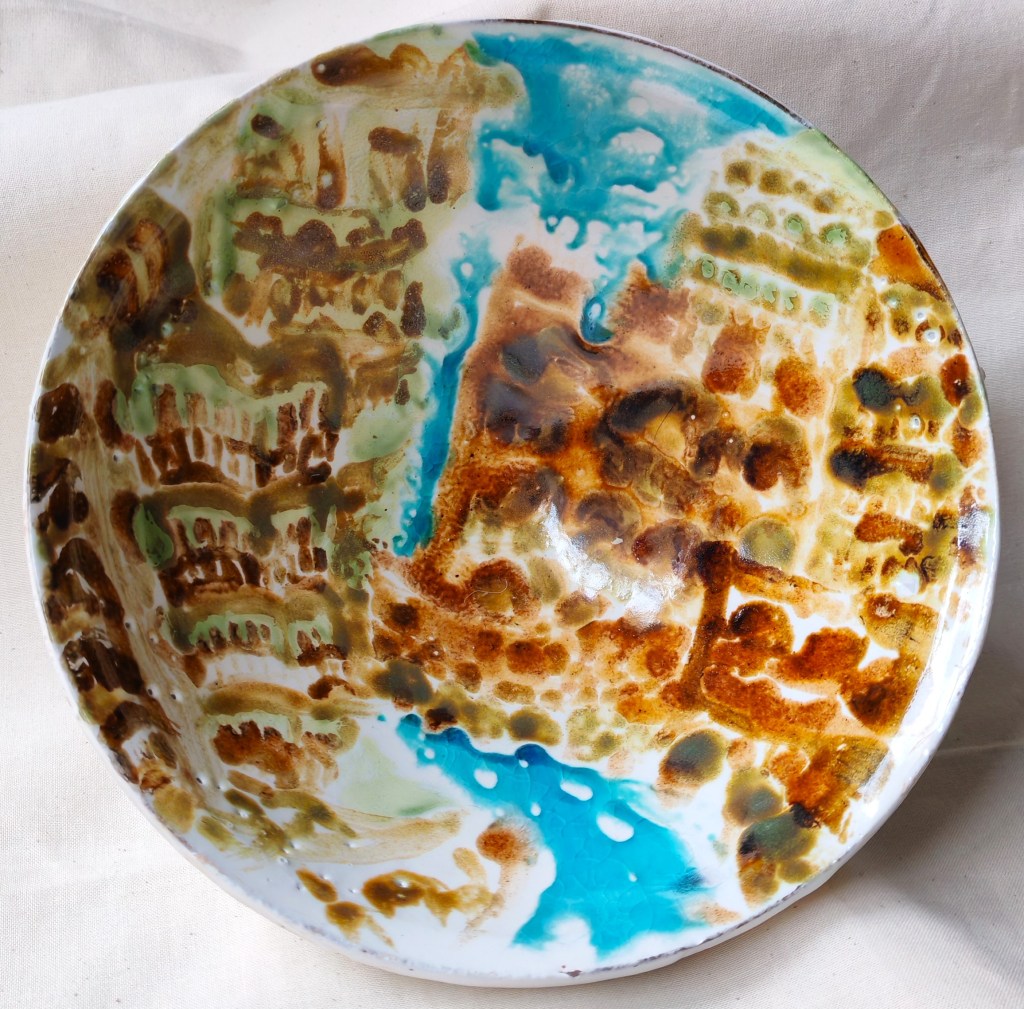
The alkaline base in this low-temperature neutral firing gives a heavily crazed surface, so I won’t use it for domestic ware, but I used it along with other colouring oxides to decorate this bowl inspired by the streets of Paris.
-
terminology
Derived from the heart of the ceramics industry in Stoke-on-Trent UK, this is useful language to know and understand when describing and explaining ceramic processes. I’ve added a link to digital fire (the most amazing website!) for most terms if you want to go deeper. I also have a notes section at the bottom for general useful things for ceramic making.
Flocculating/Deflocculating – suspension of particles (clay) in the water.
Deflocculating – sodium silicate is added to a slip, suspending the clay particles and making the slip “thinner”. The sodium silicate is an electrolyte-sourcing material that creates an electric charge between the clay particles in the slip, repelling them from eachother and suspending them in the liquid.
Flocculating – the opposite, making a slip “gel” more. Common flocculants for slips; calcium chloride and epsom salts. You would flocculate a slip or engobe in order to apply a thicker layer onto a pot without it running off, but the hydrophobic flocculant will reduce the drying time significantly.
Drop out – separation
Water slip – suspended in water, can drop out
Engobe slip – fluxed slip/altered slip. Used to apply to bisque fired pottery and altered to fit the thermal expansion of the host body. e.g. 80% host body, 10% molochite to cut shrinkage, 10% borax frit for flux. Engobes can vitrify to a glossy/sheen surface from siliceous additions e.g. feldspar.
Pint weight – a measurement of the material content of a slip, determined by the weight of a pint vs a pint of water. Typical dipping slips have a pint weight 22-24 oz, thicker slip for trailing or painting of 26-28oz. I dont often refer to this but it was used alot in industry.
Specific Gravity –
Brognanarts formula –
NOTES
slip must be the right fit for the host body/state – reduce pint weight/specific gravity to allow for water to escape from the host body without slaking. The inside and outside of a pot should be slipped at different times, ideally different days for the same reason. Notice the clay rehydrating with applied slip.
seive size for slip 60/80
seive size for glaze 100/120
 emilydavidsonbrett